


emmanuel haro was a seven-month-old California baby whose name became widely known after he was reported missing in August 2025. What first appeared to be a kidnapping case soon changed dramatically as investigators found serious inconsistencies in the story given to authorities. The investigation eventually became a murder case involving Emmanuel’s parents, Jake Haro and Rebecca Haro.
This is a tragic and sensitive story. Emmanuel was an infant, so there is very little traditional biography to tell about his short life. Instead, understanding his case means looking carefully at what authorities discovered, what happened in court, what remains unknown, and what lessons the case raises about child safety and protection.
The information below is based on publicly reported developments available through September 2, 2026. Because the case involved ongoing investigations and court proceedings, it is important to separate confirmed facts from allegations, investigative theories, and unanswered questions.
Who Was emmanuel haro?
emmanuel haro was a seven-month-old boy from Southern California. He lived with his family in the Cabazon area and became the subject of a major search after his parents reported him missing on August 14, 2025.
At that time, Emmanuel was still an infant and depended completely on adults for food, medical care, protection, and everyday needs. His young age made the situation especially urgent.
According to reports, his mother told authorities that she had been attacked outside a retail store on Yucaipa Boulevard and that Emmanuel had been taken. The report immediately triggered a missing-child investigation.
Authorities and community members searched for the baby. However, investigators soon began finding inconsistencies in the account of what had happened.
Those inconsistencies changed the direction of the investigation.
emmanuel haro and the Missing-Child Investigation
When a young child disappears, time matters enormously. Law enforcement agencies generally work quickly to determine where the child was last seen, who was present, and whether there is evidence of an accident, abduction, or other danger.
In Emmanuel’s case, investigators initially treated the situation as a missing-child investigation.
The public was also asked to help. Searches were conducted in areas connected with the case, while detectives worked to establish what had happened.
Early reports described Emmanuel as approximately 21 pounds and about 24 inches tall, with brown hair and brown eyes. His disappearance received considerable attention because he was only seven months old.
At first, the central question was simple:
Where was Emmanuel?
But as detectives examined the evidence, another question became increasingly important:
Had Emmanuel actually been kidnapped?
That change would become one of the most important developments in the entire case.
What Happened on August 14, 2025?
On August 14, 2025, Emmanuel was reported missing.
His mother, Rebecca Haro, told authorities that she had been attacked while outside a store in Yucaipa and that an unknown person had taken her baby. The report led to an immediate investigation and a large search effort.
Investigators examined the circumstances surrounding the alleged attack and disappearance.
However, authorities said they found inconsistencies in the mother’s account.
This is a crucial point when discussing the case. The original kidnapping story was not ultimately accepted by investigators. According to later reporting, authorities concluded that the kidnapping had not occurred and that Emmanuel had already died before the missing-child report was made.
The investigation therefore shifted from finding a missing child to determining how the infant died and what had happened to him afterward.
The Investigation Takes a Dark Turn
The investigation took a major turn on August 22, 2025.
Jake Haro and Rebecca Haro, Emmanuel’s parents, were arrested on suspicion of murder. At that point, authorities were no longer treating the situation as a simple disappearance.
The arrests shocked many people because the case had begun with a report that Emmanuel had supposedly been abducted by a stranger.
Investigators instead developed a theory that Emmanuel had died as a result of abuse.
The Associated Press reported that authorities believed the baby had suffered prolonged abuse and that the abuse contributed to his death. Investigators also said they had found problems with the original kidnapping account.
It was a heartbreaking development.
For the public, the case raised difficult questions about how a child who was supposed to be protected could become the center of such a devastating investigation.
What Authorities Said About Emmanuel’s Death
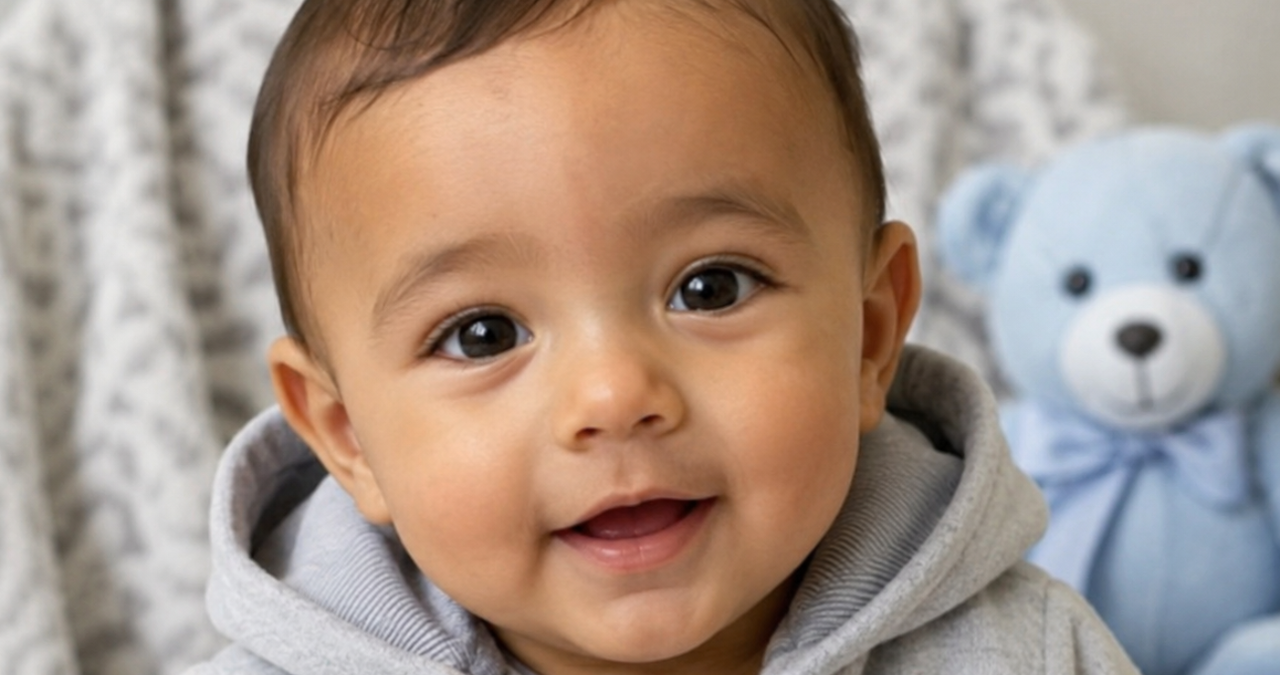
emmanuel haro Authorities later said they believed Emmanuel died after suffering repeated abuse.
However, it is important to use careful language when describing investigative evidence. Some details about the exact circumstances of his death were never publicly established through a trial because both parents ultimately entered guilty pleas.
Prosecutors said the evidence pointed to a prolonged period of abuse rather than a single isolated event. A later report from NBC Palm Springs quoted lead prosecutor Brandon Smith saying investigators believed Emmanuel died days or possibly weeks before his parents reported him missing.
This distinction matters.
The case was not simply about one mysterious disappearance. According to prosecutors, it involved a longer period in which Emmanuel was allegedly subjected to harmful treatment before his death.
That is one reason the case has attracted continued attention from child-safety advocates and the public.
A Look at the Emmanuel Haro Case
| Key event | What happened |
|---|---|
| August 14, 2025 | Emmanuel was reported missing |
| August 2025 | Investigators searched for the infant and examined the kidnapping account |
| August 22, 2025 | Jake and Rebecca Haro were arrested on murder charges |
| October 2025 | Jake Haro pleaded guilty to murder-related charges |
| November 3, 2025 | Jake Haro received a lengthy prison sentence |
| March 2026 | Rebecca Haro’s criminal case moved toward a preliminary hearing |
| May 29, 2026 | Rebecca Haro pleaded guilty to several charges |
| May 2026 | Rebecca received a 12-year, 8-month prison sentence |
| August 2026 | Prosecutors discussed additional details publicly |
| September 2026 | Emmanuel’s remains had still not been recovered |
The timeline shows how quickly the case moved from a missing-child investigation to a criminal prosecution.
Jake Haro’s Role in the Case
Jake Haro, Emmanuel’s father, eventually pleaded guilty to second-degree murder.
His guilty plea was a major turning point because it established his criminal responsibility without the need for a full murder trial.
On November 3, 2025, he was sentenced to 25 years to life in prison for murder, along with additional prison time for other offenses. ABC News reported that the additional sentences included charges connected to the case.
ABC7 also reported that the judge imposed a sentence exceeding 30 years when the additional offenses were included.
The sentencing reflected the seriousness of the crime.
Jake Haro had also previously been involved in a child-abuse case involving another child. That earlier history became an important part of public discussion about whether more could have been done to protect children in the family.
Rebecca Haro’s Role
Rebecca Haro’s legal situation developed differently.
After initially facing a murder case, she eventually accepted a plea agreement in May 2026.
On May 29, 2026, Rebecca pleaded guilty to charges that included:
- Child abuse or endangerment-related conduct
- Involuntary manslaughter
- Accessory after the fact
She was sentenced to 12 years and eight months in state prison.
According to prosecutors, her conduct involved failing to protect Emmanuel from ongoing abuse and later participating in actions intended to conceal what had happened.
Her plea avoided a full criminal trial.
That means some questions that might otherwise have been explored through testimony and cross-examination were resolved through the plea agreement instead.
Where Is emmanuel haro?
One of the most painful unanswered questions is the location of Emmanuel’s remains.
Despite extensive searches, investigators have not recovered his body.
Search teams examined several locations during the investigation. Authorities also conducted searches in areas around the 60 Freeway and other locations connected to investigative leads.
In August 2026, NBC Palm Springs reported that Emmanuel’s remains still had not been recovered. Prosecutor Brandon Smith said investigators might never find the child’s body.
This unresolved issue makes the case especially difficult for Emmanuel’s family and the community.
For many families dealing with a death, having a burial place can provide a sense of closure. In Emmanuel’s case, that basic opportunity has remained unavailable.
Why the Missing Body Matters
A body can provide important forensic evidence.
It may help investigators determine:
- The exact cause of death
- The approximate time of death
- Whether injuries occurred before death
- Whether there are additional physical clues
- Where and how a person died
In Emmanuel’s case, investigators had to build their case without recovering his remains.
That made the investigation more challenging.
Nevertheless, prosecutors said other evidence supported the charges and guilty pleas. Jake Haro’s guilty plea and Rebecca Haro’s later plea agreement brought criminal accountability even though Emmanuel’s body has not been found.
This demonstrates an important point about criminal investigations: a missing body does not automatically prevent prosecutors from pursuing a homicide case.
Earlier Child-Abuse History Became Important
Another troubling part of the story involves Jake Haro’s previous child-abuse case.
According to reporting from the Associated Press and ABC7, Jake Haro had previously pleaded guilty to seriously injuring another child. That earlier case resulted in criticism over the sentence he received at the time.
The history became relevant because it raised questions about whether warning signs had been missed.
Child-protection systems are designed to identify dangerous situations and intervene when children may be at risk. When a later tragedy occurs, people naturally ask whether earlier intervention could have changed the outcome.
Those questions are difficult, but they’re important.
A New Lawsuit Raises Child-Safety Questions
The legal story did not end with the criminal convictions.
In August 2026, a civil lawsuit was reported against Riverside County concerning whether child-protection authorities missed opportunities to intervene in the family’s situation. The lawsuit was brought on behalf of Emmanuel’s sister and argues that earlier intervention might have prevented harm.
It is important to distinguish a civil lawsuit from a criminal conviction.
A criminal case determines whether a person is legally responsible for a crime under the criminal standard of proof. A civil lawsuit generally deals with questions such as responsibility, negligence, damages, and whether an organization failed to meet a legal duty.
Because the civil matter is separate, claims made in that lawsuit should be understood as allegations unless and until established through the legal process.
Still, the case highlights a broader issue:
How can child-protection systems identify danger early enough to prevent tragedy?
What the Emmanuel Haro Case Teaches About Child Safety
The story of emmanuel haro is deeply sad, but it also highlights several important child-safety lessons.
Early Warning Signs Matter
When adults notice signs of abuse, injuries, neglect, or dangerous behavior around a child, those concerns should not be ignored.
Warning signs may include:
- Repeated unexplained injuries
- Sudden changes in a child’s behavior
- Fear around a particular adult
- Poor medical care
- Unsafe living conditions
- Frequent unexplained emergencies
- Adults giving conflicting explanations about injuries
No single sign automatically proves abuse. However, patterns deserve attention.
Children Depend on Adults
Infants cannot explain what is happening to them.
They can’t call for help.
They can’t leave an unsafe home.
They can’t explain injuries.
That is why adults, medical professionals, teachers, relatives, neighbors, and child-protection workers all have an important role in keeping children safe.
Speaking Up Can Save Lives
When someone believes a child may be in danger, reporting the concern to appropriate authorities can be an important step.
It can feel uncomfortable. People may worry about being wrong or causing problems for a family.
But when a child’s safety is involved, ignoring a serious warning can have devastating consequences.
The Importance of Responsible Reporting
The Emmanuel case also teaches a lesson about how sensitive news stories should be reported.
When covering cases involving children, journalists and readers should avoid:
- Spreading unverified rumors
- Sharing graphic details unnecessarily
- Blaming people who were not charged
- Treating allegations as proven facts
- Sharing private information about surviving children
- Turning tragedy into entertainment
Instead, responsible reporting should focus on verified information from law enforcement, court records, prosecutors, and reputable news organizations.
This is especially important in true-crime stories, where social-media speculation can quickly become confused with fact.
Separating Facts From Speculation
There has been significant public interest in the Emmanuel case, and that interest has produced many theories online.
However, readers should be cautious.
A social-media post isn’t automatically evidence.
A video isn’t necessarily proof.
An anonymous comment isn’t the same as a court record.
The most reliable information comes from sources such as:
- Court proceedings
- Prosecutors’ statements
- Official law-enforcement information
- Reputable news organizations
- Publicly available legal documents
This approach helps protect both the truth and the dignity of victims.
In Emmanuel’s case, careful reporting is particularly important because the child cannot speak for himself.
The Community’s Search for Emmanuel
After Emmanuel was reported missing, members of the community became involved in the search.
Searches covered locations around Yucaipa, Cabazon, and other areas connected with investigative leads. Authorities used detectives, search teams, and specialized resources as they attempted to determine what happened.
The response showed how strongly communities can react when a child disappears.
People who didn’t know Emmanuel personally still wanted him to be found.
That compassion matters.
Although the search did not produce Emmanuel’s remains, the public attention helped keep the case in the spotlight and demonstrated the importance of community cooperation during missing-child investigations.
Why emmanuel haro Remains in the Public Conversation
Several factors explain why the case continues to attract attention.
First, Emmanuel was only seven months old.
Second, the case began with a reported kidnapping but later became a homicide investigation.
Third, both parents eventually pleaded guilty to crimes connected with his death.
Fourth, Emmanuel’s remains have never been recovered.
Finally, the case has raised broader questions about child protection and whether earlier intervention could have changed what happened.
These elements make the case more than a single criminal story. It has become part of a wider conversation about protecting vulnerable children.
What Happened to the Family?
The criminal case dramatically changed the Haro family.
Jake Haro is serving a lengthy prison sentence after pleading guilty to murdering Emmanuel. Rebecca Haro is also serving a prison sentence after pleading guilty to charges connected to Emmanuel’s death.
The family’s other children have also been affected.
Reporting has described child-protection involvement concerning the surviving children. That is another reminder that when a child is harmed, the effects can spread through an entire family and community.
For surviving children, safety, stability, counseling, and long-term support can be extremely important.
What Remains Unknown?
Even after the guilty pleas, some questions remain unanswered.
The biggest unanswered question is the location of Emmanuel’s remains.
Other questions concern the precise timeline of his death and the full circumstances surrounding what happened inside the family home.
Prosecutors have provided their understanding of the case, but some details cannot be known with complete certainty without additional evidence.
That is why responsible articles should avoid filling gaps with guesses.
Sometimes, the most honest answer is simply:
We don’t know.
Acknowledging uncertainty is not a weakness. In fact, it is a sign of responsible reporting.
Remembering Emmanuel Beyond the Headlines
It can be easy for a child involved in a major criminal case to become known only through headlines.
But Emmanuel was more than a case number or a news story.
He was a baby who should have had the opportunity to grow up, learn, play, make friends, and build a future.
That is perhaps the most important human point in this entire story.
Instead of focusing only on sensational details, readers can remember Emmanuel by thinking about the broader responsibility adults have toward children.
Every child deserves:
- A safe home
- Proper medical care
- Protection from violence
- Loving and responsible adults
- A chance to grow and learn
- Someone willing to speak up when something is wrong
Those basic rights should never be treated as optional.
Lessons for Parents, Families, and Communities
The case provides several practical lessons.
For Parents
Parents should take injuries, behavioral changes, and health concerns seriously. If a child is hurt, obtaining appropriate medical care can be critical.
For Relatives
Family members may notice problems that parents do not recognize or do not discuss. If a child appears unsafe, relatives should take concerns seriously.
For Neighbors
Neighbors don’t need to investigate suspected abuse themselves. They can report serious concerns through the appropriate channels.
For Professionals
Doctors, teachers, social workers, and other professionals who work with children have an especially important responsibility to recognize warning signs and follow safeguarding procedures.
For the Public
Social-media users should avoid spreading rumors. Sharing accurate information can help, while misinformation can hurt families and interfere with public understanding.
A Timeline of the Major Developments
Here’s a simple overview of the case:
- August 14, 2025: Emmanuel was reported missing.
- August 2025: Investigators began searching for him and examining the circumstances of the alleged kidnapping.
- August 22, 2025: His parents, Jake and Rebecca Haro, were arrested on murder charges.
- October 2025: Jake Haro pleaded guilty to murder.
- November 3, 2025: Jake was sentenced to 25 years to life for murder, plus additional prison time for other offenses.
- March 2026: Rebecca Haro’s murder case continued through court proceedings.
- May 29, 2026: Rebecca pleaded guilty to involuntary manslaughter and other charges and received a 12-year, eight-month sentence.
- August 2026: Prosecutors discussed further details and confirmed that Emmanuel’s remains had still not been recovered.
- September 2026: The case continues to raise questions about child protection, accountability, and the missing remains of Emmanuel.
Frequently Asked Questions About emmanuel haro
Who was emmanuel haro?
emmanuel haro was a seven-month-old boy from Southern California who was reported missing in August 2025. His case later became a homicide investigation involving his parents.
When was Emmanuel reported missing?
He was reported missing on August 14, 2025.
Was Emmanuel actually kidnapped?
Authorities ultimately concluded that the reported kidnapping did not occur and that the original account was false. Prosecutors later said Emmanuel had died before the reported disappearance.
Who was convicted in the case?
Jake Haro pleaded guilty to second-degree murder and received a sentence of 25 years to life for murder, with additional prison time for other offenses.
What happened to Rebecca Haro?
Rebecca Haro pleaded guilty in May 2026 to involuntary manslaughter and other charges connected to Emmanuel’s death. She was sentenced to 12 years and eight months in prison.
Has Emmanuel’s body been found?
No. As of September 2026, his remains had not been recovered.
Why is the case still important?
The case remains important because it involves the death of an infant, questions about child protection, criminal accountability, and the continuing effort to understand what happened to Emmanuel.
Final Thoughts on emmanuel haro
The story of emmanuel haro is one of the most heartbreaking examples of how vulnerable children can depend entirely on adults for protection. What began as a reported kidnapping developed into a murder investigation, followed by guilty pleas and prison sentences for Emmanuel’s parents. Yet one painful mystery remains: Emmanuel’s remains have still not been found.
The case should be discussed with care, accuracy, and respect. Emmanuel was a child, not simply a headline. Remembering emmanuel haro should therefore mean more than remembering the criminal investigation. It should also mean recognizing the responsibility society has to protect children, listen when warning signs appear, and act when a vulnerable child may be in danger.