
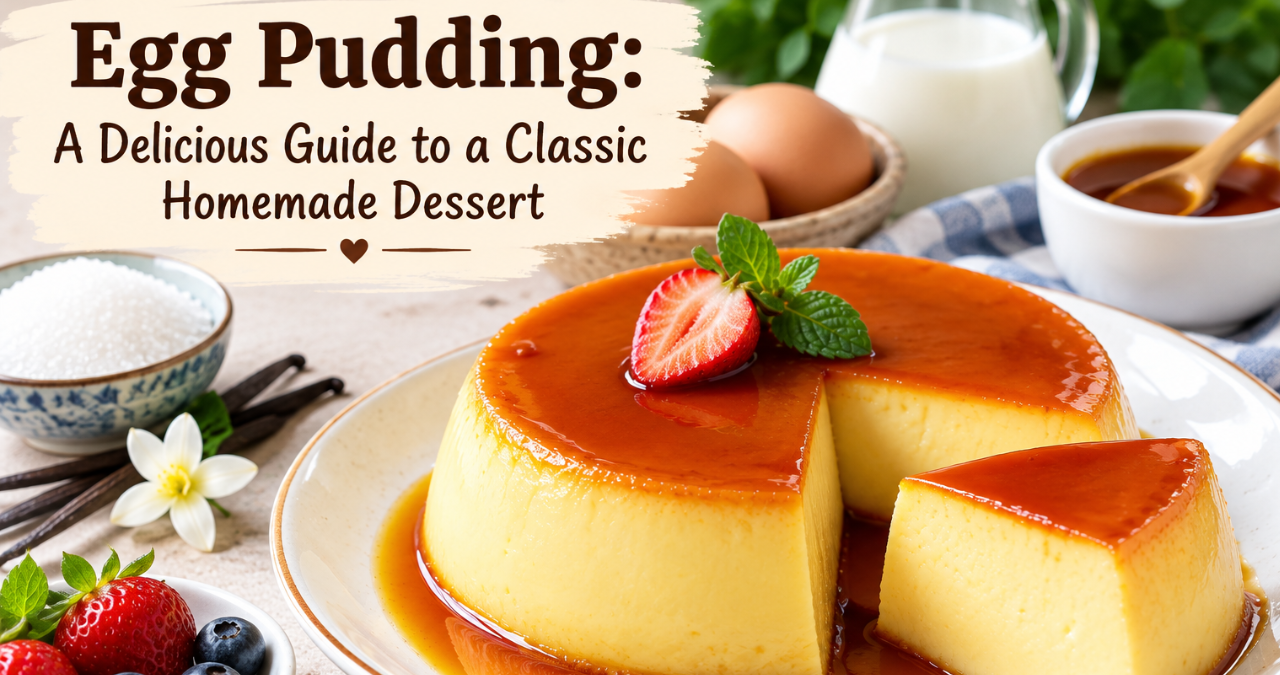

egg pudding is a simple, creamy, and comforting dessert made mainly with eggs, milk, sugar, and flavoring. It has a smooth texture, a gentle sweetness, and a rich taste that makes it popular with children and adults alike. Unlike many complicated desserts, egg pudding doesn’t require a long list of ingredients or advanced cooking skills. With a little patience and the right technique, almost anyone can prepare it at home.
Egg pudding can be steamed, baked, or cooked gently on the stovetop, depending on the recipe and equipment available. It can also be served plain or topped with caramel, fresh fruit, nuts, whipped cream, or a light drizzle of sauce. In other words, this humble dessert can be dressed up for a special occasion or enjoyed as a cozy treat after an everyday meal.
This guide explains what egg pudding is, where its basic idea comes from, what ingredients are needed, how to prepare it, common mistakes to avoid, and how to make the dessert more interesting. Whether you’re making pudding for the first time or hoping to improve an old family recipe, there’s plenty here to help.
What Is Egg Pudding?
Egg pudding is a soft dessert prepared by combining eggs with milk and a sweetener. The mixture is heated gently until the eggs set and create a smooth, custard-like texture. Vanilla is often added for fragrance, while caramel is a popular topping or base in many versions.
The magic of egg pudding comes from the eggs. When eggs are heated carefully, their proteins change structure and thicken the liquid mixture. However, heating them too quickly can cause the proteins to tighten too much. That’s why gentle cooking is so important.
A well-made pudding should be:
- Smooth and creamy
- Soft but firm enough to hold its shape
- Lightly sweet
- Pleasantly fragrant
- Free from large bubbles or a scrambled texture
Although the basic recipe is straightforward, small details can make a big difference.
Why Is Egg Pudding So Popular?
There are countless desserts available today, from cakes and cookies to ice cream and pastries. So, why does egg pudding continue to win people over?
One reason is its simplicity. Most kitchens already have the main ingredients. You don’t need special decorating equipment, expensive ingredients, or complicated techniques.
Another reason is its texture. The pudding feels soft and silky when eaten, which makes it especially appealing after a filling meal. It’s also easy to change according to personal taste.
Egg pudding is popular because:
- It uses common kitchen ingredients.
- It can be prepared in several ways.
- It works well for both children and adults.
- It can be served warm, chilled, or at room temperature.
- It can be made plain or flavored.
- It pairs well with fruit, caramel, and other toppings.
- It is suitable for family meals and celebrations.
It’s a classic case of less being more. A few basic ingredients can create something genuinely satisfying.
The Main Ingredients in Egg Pudding
The quality of a pudding depends greatly on its ingredients. Fortunately, the ingredient list is usually short.
| Ingredient | Main Purpose | Helpful Tip |
|---|---|---|
| Eggs | Provide structure and richness | Use fresh eggs |
| Milk | Creates a creamy base | Whole milk gives a richer result |
| Sugar | Adds sweetness | Adjust according to taste |
| Vanilla | Adds aroma and flavor | Pure vanilla works beautifully |
| Caramel | Adds color and deep sweetness | Don’t burn it |
| Salt | Balances sweetness | Use only a tiny amount |
Some recipes may include cream, condensed milk, coconut milk, cinnamon, nutmeg, or other flavorings.
Choosing Good Eggs
Fresh eggs can help produce a cleaner taste and pleasant texture. If possible, use eggs that are fresh and stored correctly.
Before mixing, crack each egg into a separate small bowl. This simple habit can save the entire recipe if one egg happens to be spoiled.
Choosing the Milk
Whole milk usually produces a rich and creamy pudding. Lower-fat milk can also work, although the final texture may be slightly lighter.
For a richer dessert, some recipes replace part of the milk with cream. However, you don’t need cream to make delicious pudding.
Choosing the Sweetener
White sugar is the most common choice, but other sweeteners can sometimes be used. Brown sugar gives a deeper flavor, while some recipes use condensed milk.
The key is balance. Too little sugar can make the pudding taste flat, while too much may hide the delicate flavor of the eggs and milk.
How to Make Egg Pudding at Home
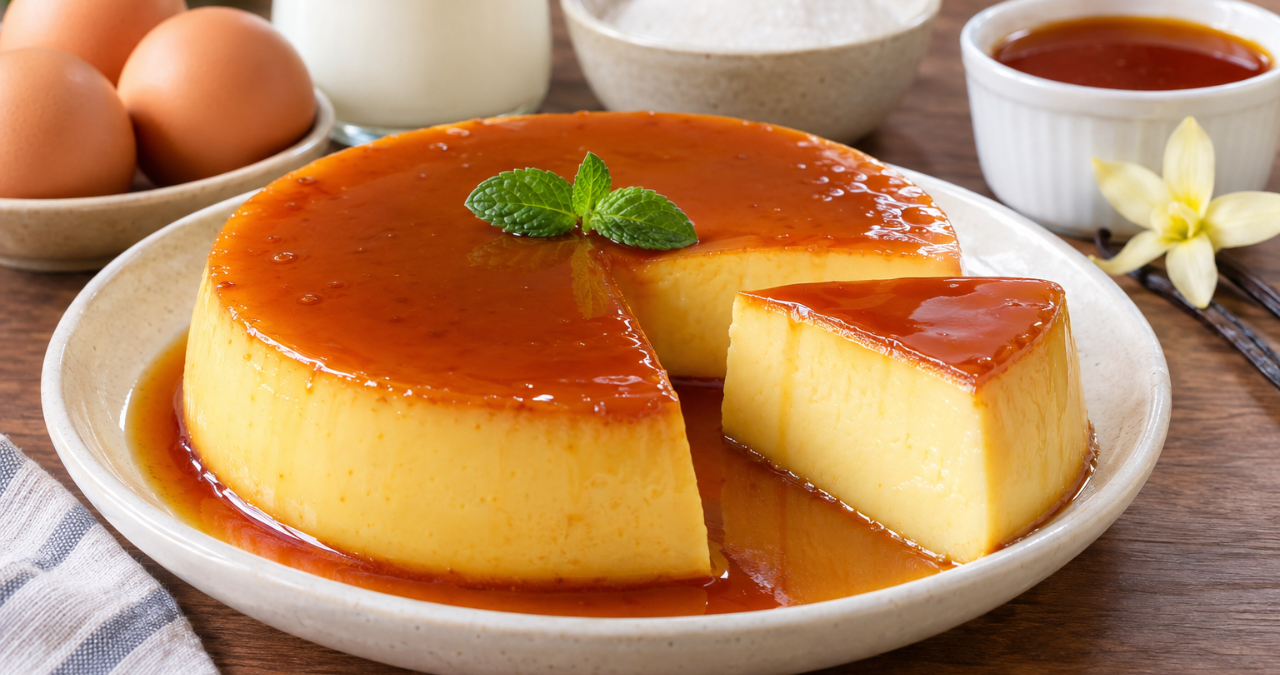
egg pudding Making egg pudding isn’t difficult, but the process rewards patience. The goal is to cook the egg mixture slowly and evenly.
Prepare the Caramel
If you’re making caramel pudding, begin by placing sugar in a clean pan over low to medium heat.
Allow the sugar to melt gradually. As it heats, it changes from white crystals into a golden liquid. Stir carefully if needed, but avoid aggressive stirring.
When the caramel reaches a rich golden-brown color, pour it into your pudding dish.
Be careful because hot caramel can cause serious burns.
Tilt the dish gently so the caramel spreads across the bottom. Then set it aside while preparing the custard mixture.
Mix the Eggs
Crack the eggs into a bowl and beat them gently.
There’s no need to whip them like you’re making a cake. Too much beating can create many air bubbles, which may affect the final appearance.
Add sugar and mix until combined.
Add the Milk
Warm milk gently, but don’t let it boil.
Slowly add the warm milk to the eggs while stirring. This helps prevent the eggs from cooking suddenly.
Add vanilla or another flavoring at this stage.
Strain the Mixture
For a particularly smooth pudding, pour the mixture through a fine strainer.
This step removes small pieces of egg and helps create a more refined texture.
It may seem like a tiny extra job, but it’s worth doing. After all, smoothness is one of the best features of a good pudding.
Cook the Pudding
Pour the mixture over the caramel.
The pudding can now be steamed or baked, depending on your recipe.
When steaming, keep the heat gentle. Strong steam can create holes or an uneven texture.
When baking, many recipes use a water bath. The pudding dish is placed inside a larger baking pan containing hot water. This creates a gentle cooking environment.
The pudding is ready when it has set around the edges while the center still has a slight gentle wobble.
Don’t worry if it looks a little soft at first. It usually becomes firmer as it cools.
Steaming vs. Baking Egg Pudding
Both methods can produce excellent results, but they have slightly different characteristics.
| Feature | Steaming | Baking |
|---|---|---|
| Cooking Environment | Moist heat | Dry heat with optional water bath |
| Texture | Often very soft | Smooth and firm |
| Equipment | Steamer or suitable pot | Oven and baking dish |
| Heat Control | Usually simple | Requires oven control |
| Traditional Feel | Common in many home recipes | Common in custard-style recipes |
| Difficulty | Beginner-friendly | Beginner to intermediate |
If you don’t have an oven, steaming is a practical choice. If you already use an oven comfortably, baking can give excellent results too.
How to Get a Smooth Egg Pudding
A silky texture doesn’t happen by accident. Several small techniques can help.
Don’t Overbeat the Eggs
Gentle mixing is usually better than vigorous whisking. Excessive beating introduces air.
Cook Slowly
High heat is one of the biggest enemies of smooth pudding. Slow cooking allows the egg proteins to set gradually.
Strain the Custard
Straining removes unwanted particles and improves the final texture.
Avoid Boiling
Egg pudding should cook gently rather than bubble aggressively.
If the mixture boils, the eggs may become tough and grainy.
Use a Water Bath
When baking, a water bath provides gentle and even heat. This reduces the chance of overcooking the edges.
Let It Rest
Once cooked, allow the pudding to cool before cutting or unmolding it. Rushing this step can cause cracks or make the pudding difficult to handle.
Common Egg Pudding Mistakes
Even a simple recipe can go wrong. Don’t worry, though. Most problems are easy to understand and prevent.
Pudding Becomes Rubbery
This usually happens because the eggs were overcooked.
Solution: Reduce the cooking temperature and remove the pudding when it has just set.
Pudding Has Holes
Large holes can form when too much air is mixed into the eggs or when the pudding is cooked too aggressively.
Solution: Mix gently and use lower heat.
Pudding Smells Too Eggy
A strong egg smell may come from overcooking or an unbalanced recipe.
Solution: Use fresh eggs, add a small amount of vanilla, and avoid excessive cooking.
Caramel Tastes Bitter
Caramel becomes bitter when sugar is burned.
Solution: Watch it carefully and remove it from the heat once it reaches a deep golden color.
Pudding Won’t Set
The pudding may need more cooking time, or the ratio of liquid to eggs may be too high.
Solution: Cook gently for a little longer while checking the texture regularly.
Pudding Breaks During Unmolding
Trying to remove the pudding while it’s still warm can cause it to fall apart.
Solution: Chill it properly and loosen the edges carefully before turning it onto a plate.
Flavor Variations for Egg Pudding
The traditional version is delicious on its own, but there’s no harm in experimenting.
Vanilla Egg Pudding
Vanilla is one of the easiest ways to enhance the basic recipe. It adds a warm aroma without overpowering the custard.
Caramel Egg Pudding
Caramel adds a deep, slightly toasted sweetness. This version is especially attractive because the golden sauce flows over the pudding when it is unmolded.
Coconut Egg Pudding
Coconut milk can replace some or all of the regular milk. It gives the pudding a tropical flavor.
Chocolate Egg Pudding
A small amount of cocoa or melted chocolate can turn the dessert into a richer treat.
Coffee Egg Pudding
Coffee lovers can add a little strong brewed coffee or espresso. The result is more grown-up and pleasantly bitter-sweet.
Cinnamon Egg Pudding
A little cinnamon can create a warm, comforting flavor. It’s particularly enjoyable during cooler weather.
Citrus Egg Pudding
A small amount of orange or lemon zest can add freshness. Be careful not to add too much because the pudding should still taste creamy.
Creative Ways to Serve Egg Pudding
Presentation can turn an ordinary dessert into something special.
You can serve pudding with:
- Fresh strawberries
- Banana slices
- Mango pieces
- Blueberries
- Toasted coconut
- Chopped nuts
- Whipped cream
- Caramel sauce
- Chocolate shavings
- Fresh mint
- A light dusting of cinnamon
For a dinner party, place individual portions on small plates and add a simple fruit garnish.
For children, colorful fruit can make the dessert more appealing.
For a family gathering, one large pudding can be placed in the center of the table and sliced for everyone.
Is Egg Pudding Nutritious?
Egg pudding can provide useful nutrients because its main ingredients include eggs and milk. Eggs contain protein and several important vitamins and minerals. Milk contributes protein and calcium.
However, pudding is still a dessert, and recipes can contain a considerable amount of added sugar. Therefore, it is best enjoyed as part of a balanced diet rather than treated as a replacement for a complete meal.
The nutritional value depends on:
- The amount of sugar used
- The type of milk
- Whether cream is added
- The serving size
- Additional toppings
If you’re trying to reduce sugar, you can experiment with using less sweetener while keeping the basic recipe intact.
Egg Pudding for Children
Soft desserts can be attractive to children because they’re easy to eat and have a gentle texture.
When serving pudding to children, consider keeping the portion moderate. You can also make it more interesting by adding small amounts of fresh fruit.
For younger children, make sure toppings such as nuts are prepared safely according to their age and chewing ability.
A homemade pudding also gives parents more control over the ingredients compared with many packaged desserts.
Egg Pudding for Special Occasions
Although pudding is easy enough for an ordinary evening, it can also fit beautifully into celebrations.
For birthdays, family dinners, holidays, and dinner parties, you can make individual puddings in small molds.
A few simple touches can make a big difference:
- Add caramel sauce.
- Decorate with fruit.
- Serve on elegant dessert plates.
- Add a small mint leaf.
- Sprinkle lightly with cinnamon.
- Use decorative molds.
You don’t need expensive decorations. As the saying goes, sometimes simplicity speaks louder than extravagance.
How to Store Egg Pudding
Because egg pudding contains eggs and milk, it should be handled carefully.
Once the pudding has cooled, cover it and refrigerate it promptly. Keeping it chilled helps maintain quality and reduces food-safety risks.
Use clean utensils when serving it, and don’t leave the pudding at room temperature for long periods.
For the best quality, enjoy homemade pudding while it is fresh rather than storing it for an extended period.
If you notice an unusual smell, appearance, or texture, it’s safer not to eat it.
Tips for Better Homemade Results
A few practical habits can make your pudding much better.
Use gentle heat: Slow cooking is one of the most important rules.
Measure carefully: Although the recipe is simple, the balance between eggs, milk, and sugar matters.
Mix gently: Avoid creating unnecessary air bubbles.
Strain the mixture: This helps create a smooth finish.
Don’t rush cooling: Allow the pudding to set properly.
Watch the caramel: Sugar can move from perfectly golden to burnt surprisingly quickly.
Keep equipment clean: Good food hygiene is essential when working with eggs and dairy.
Practice makes progress: Your first pudding may not be perfect, and that’s okay. Each attempt teaches you something useful.
How Egg Pudding Can Be Made More Interesting
Once you’ve mastered the basic recipe, you can explore new ideas.
Try creating layers with fruit or serving the pudding alongside a crisp biscuit. You can also experiment with different molds to create attractive shapes.
Another option is to make mini puddings for parties. Small portions cook relatively evenly and are easy for guests to serve.
You could even create a dessert table featuring several flavors, such as:
- Classic vanilla
- Caramel
- Coconut
- Chocolate
- Coffee
- Cinnamon
This gives guests a chance to choose their favorite.
Frequently Asked Questions About Egg Pudding
Can I make egg pudding without an oven?
Yes. Steaming is a popular alternative and can produce a soft, smooth pudding.
Why does my pudding have bubbles?
Bubbles usually come from too much air in the egg mixture or cooking at excessive heat.
Can I use low-fat milk?
Yes, although the pudding may be slightly less rich than one made with whole milk.
Should egg pudding be served hot or cold?
It can be enjoyed warm, at room temperature, or chilled. Many people prefer it chilled because the texture becomes firmer.
Can I reduce the sugar?
Yes. You can adjust the sweetness to suit your taste, although changing the amount too much may affect the overall balance.
Why is my pudding grainy?
Graininess is often caused by overheating or overcooking the eggs.
Can I add fruit?
Absolutely. Fresh fruit can add color, flavor, and freshness.
How do I know when the pudding is done?
The edges should be set, while the center should have a gentle wobble rather than appearing completely liquid.
Final Thoughts on Egg Pudding
egg pudding is proof that a great dessert doesn’t need to be complicated. With eggs, milk, sugar, and a few simple flavoring choices, you can create a creamy and comforting treat suitable for everyday meals or special occasions. The most important lessons are to use fresh ingredients, mix gently, cook slowly, and give the pudding enough time to cool and set.
Whether you prefer classic vanilla, golden caramel, tropical coconut, rich chocolate, or another creative variation, egg pudding offers plenty of room for experimentation. Start with the basic method, learn from each batch, and then make the recipe your own. With a little practice and patience, egg pudding can become a reliable homemade favorite that brings a simple, delicious finish to almost any meal.