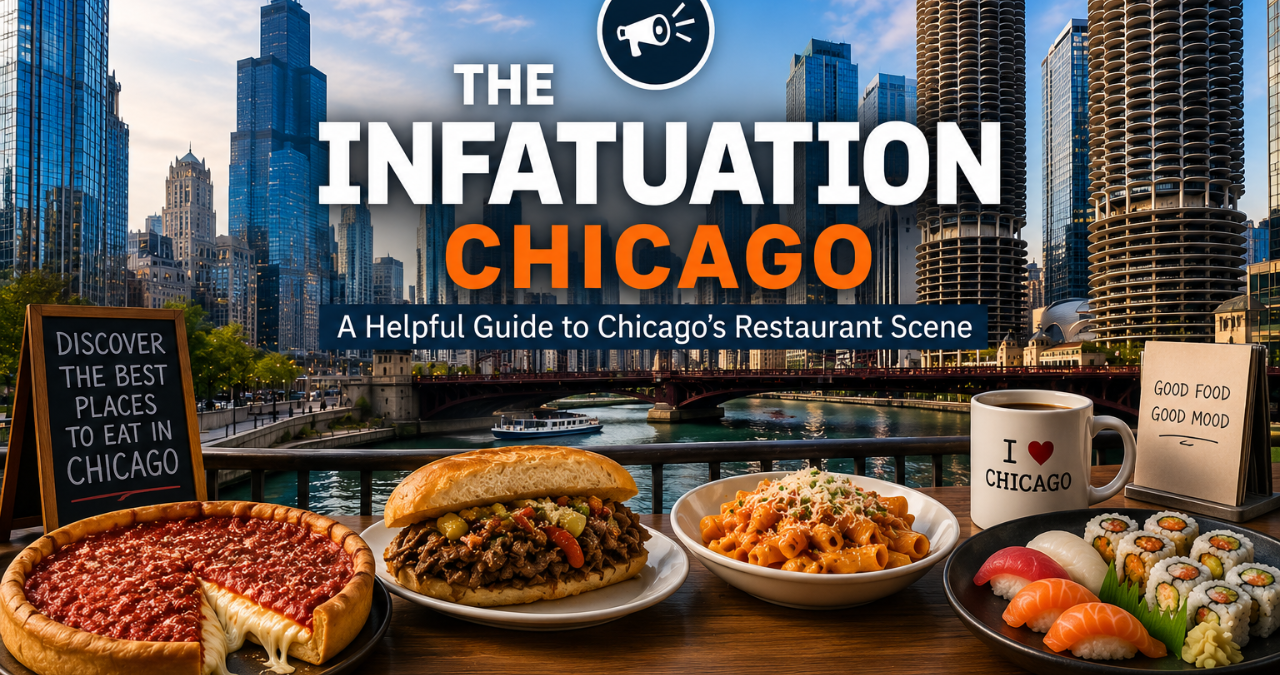

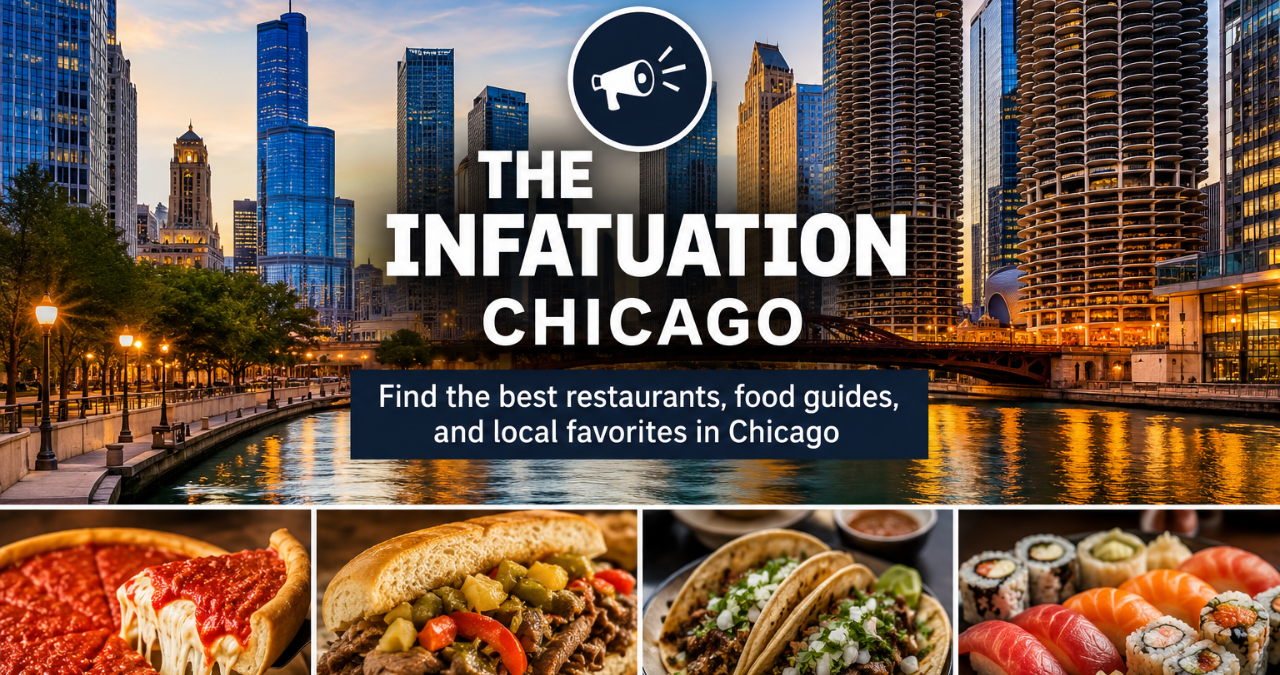
the infatuation chicago has become a useful destination for people who want to make smarter choices about where to eat in one of America’s most exciting food cities. Chicago has thousands of restaurants, from small neighborhood cafés and casual sandwich shops to famous fine-dining destinations. With so many choices, deciding where to spend your time and money can be difficult.
That’s where a well-organized restaurant guide can make a real difference. The Infatuation’s Chicago section brings together restaurant reviews, neighborhood guides, food lists, recommendations, and practical ideas for different occasions. Its current Chicago pages cover everything from pizza, tacos, burgers, sushi, and Italian food to coffee shops, affordable meals, tasting menus, and new restaurant openings.
This article explains what the infatuation chicago offers, how its restaurant recommendations work, what kinds of guides readers can find, and how visitors and locals can use the platform effectively.
What Is the infatuation chicago?
the infatuation chicago is the Chicago-focused part of The Infatuation, a restaurant discovery and review platform. Its goal is simple: help people decide where to eat.
Instead of giving readers one enormous list of restaurants, the Chicago site organizes information around real dining situations. For example, someone might be looking for:
- The best pizza
- A good restaurant for a date
- An affordable meal
- A family-friendly restaurant
- Fine dining
- A neighborhood restaurant
- A place for lunch
- A restaurant for a large group
- A new restaurant worth trying
- A coffee shop
- A particular type of international cuisine
This approach is practical because choosing a restaurant usually depends on more than food quality. Location, price, atmosphere, occasion, availability, and personal taste can all matter.
The Infatuation’s official Chicago pages currently feature hundreds of guides and restaurant reviews, showing how broad the city’s dining coverage has become.
Why Chicago Is Such an Important Food City
Chicago has a remarkable food culture. Its identity isn’t based on just one famous dish.
Of course, visitors often think about deep-dish pizza, Italian beef, and Chicago-style hot dogs. Those foods are important, but the city’s restaurant scene goes much further.
Chicago’s neighborhoods reflect the city’s history of immigration and cultural exchange. Diners can find restaurants serving Mexican, Filipino, Japanese, Korean, Indian, Italian, Greek, Middle Eastern, Chinese, Vietnamese, American, and many other cuisines.
This variety makes Chicago exciting—but it can also make restaurant hunting overwhelming.
A visitor who has only two or three days in the city may not have time to experiment with dozens of places. A local may have an even different problem: there are always new restaurants opening.
That’s why curated restaurant guides can be helpful.
How the infatuation chicago Helps Diners
One of the strongest features of the infatuation chicago is organization.
Readers don’t have to begin with a blank search box. Instead, they can explore guides designed around particular needs.
For example, the Chicago section includes guides covering:
- Best restaurants
- New restaurant openings
- Best pizza
- Best tacos
- Best burgers
- Best sushi
- Best pasta
- Best Italian restaurants
- Best coffee shops and cafés
- Affordable dining
- Fine dining
- Neighborhood restaurants
- Restaurant recommendations for visitors
The site also regularly updates its guides. As of September 2026, its Chicago guides include recent coverage of new restaurants and changing dining trends.
That matters because restaurants don’t stay the same forever. A restaurant may change chefs, menus, prices, hours, or even close. Fresh information is therefore extremely valuable.
The Infatuation Chicago Restaurant Reviews
Restaurant reviews are at the heart of the platform.
The Chicago review section gives restaurants ratings and descriptions that help readers understand what makes each place special. Current top-rated examples include Oriole, Kyoten Next Door, Cariño, Schwa, and Kasama.
However, a rating shouldn’t be the only thing a reader considers.
A restaurant with a very high rating might not be suitable for every person. Maybe it’s expensive, difficult to book, too formal, or simply focused on food that doesn’t match your taste.
A good restaurant guide should therefore answer questions such as:
- What kind of food does the restaurant serve?
- What neighborhood is it in?
- Is it casual or formal?
- Is it good for a special occasion?
- What makes it different?
- Who would enjoy it?
- What should you expect to spend?
- Is a reservation likely to be important?
This type of context makes a review much more useful than a simple star rating.
Understanding The Infatuation Chicago Ratings
the infatuation chicago Ratings can be helpful when comparing restaurants, but they need context.
The Infatuation uses a numerical rating system, with higher scores representing stronger recommendations. Its Chicago guides explain that restaurants receiving very high ratings are considered among the strongest options, while lower ratings indicate more mixed experiences.
The important thing is to avoid treating the number as an absolute truth.
Food is subjective.
For instance, one diner might love an experimental tasting menu, while another person would rather have a cheeseburger and fries. Both people can have excellent dining experiences even though they prefer completely different restaurants.
A rating works best as a starting point.
A smart way to use ratings
Consider the rating together with:
- Cuisine
- Price
- Neighborhood
- Dining style
- Atmosphere
- Occasion
- Your personal preferences
In other words, don’t just ask, “Which restaurant has the highest score?”
Ask, “Which highly rated restaurant is right for me?”
That’s a much better question.
Why Restaurant Independence Matters
One notable feature of The Infatuation’s editorial approach is its stated independence.
The company says its writers dine anonymously, pay for their own meals, and don’t accept free meals, reservations, compensation, or special treatment from restaurants. It also says writers take detailed notes and revisit restaurants before publishing their opinions.
This approach is important because restaurant reviews can influence where people spend their money.
If a review is written after receiving special treatment, the experience may not represent what an ordinary customer will receive.
Anonymous visits can help reviewers experience restaurants more like regular customers.
Of course, no review system is perfectly objective. Taste differs from person to person. Still, transparency about the reviewing process helps readers understand how recommendations are created.
The Infatuation Chicago and Neighborhood Guides
Chicago isn’t one single dining area.
It’s a collection of neighborhoods, each with its own personality and restaurant traditions.
That’s why neighborhood guides are particularly useful.
The Chicago section covers areas such as:
- The Loop
- Lincoln Park
- Logan Square
- Wicker Park
- West Loop
- Uptown
- Lakeview
- Bucktown
- Rogers Park
- Albany Park
- Ukrainian Village
- Bridgeport
- Beverly
- Dunning
- West Town
The range of neighborhood coverage shows why exploring beyond the most famous downtown areas can be rewarding.
For example, a traveler staying downtown might initially focus only on The Loop. Yet a short trip to another neighborhood could open the door to a completely different dining experience.
Exploring The Loop With the infatuation chicago
The Loop is Chicago’s central business and downtown area, making it a common destination for visitors.
However, finding a good restaurant there can be challenging because the area has many tourist-focused and business-oriented establishments.
The Infatuation’s current Loop guide specifically addresses this problem and provides recommendations for people who need to eat downtown. The guide covers situations such as business meetings, sightseeing, theater visits, and evenings around major attractions.
This is a good example of why context matters.
A restaurant doesn’t have to be the city’s absolute best to be the perfect choice for a particular situation.
If you’re attending a show in the Loop, for example, a convenient restaurant with reliable service may be more useful than a spectacular restaurant that requires a long journey.
The Infatuation Chicago for First-Time Visitors
First-time visitors often face a familiar problem: they want to try everything.
That’s understandable.
Chicago has famous foods and restaurants that deserve attention, but trying to squeeze every famous dish into one weekend can become exhausting.
The Infatuation has a dedicated guide for visitors that recommends restaurants for people getting acquainted with the city. The guide highlights classic Chicago experiences while also encouraging visitors to explore beyond the obvious choices.
A balanced first visit could include:
- A classic Chicago pizza experience
- An iconic sandwich
- A neighborhood restaurant
- A modern restaurant
- A casual breakfast or coffee stop
- One memorable dinner
This gives visitors a broader understanding of the city’s food culture.
Finding Affordable Food With the infatuation chicago
Eating well doesn’t always mean spending a fortune.
That’s another useful part of the infatuation chicago.
Its affordable-food coverage includes guides for inexpensive meals, hot dogs, sandwiches, tacos, pizza, fried chicken, and other budget-friendly choices. The site has also published a guide specifically focused on meals around the $10 level.
Budget dining is especially important for travelers and families.
A person might have enough money for one expensive dinner but still need affordable meals during the rest of the trip. Local guides can help prevent every meal from becoming a major expense.
Affordable dining can include
- Sandwich shops
- Food counters
- Taco restaurants
- Pizza by the slice
- Hot dog stands
- Casual cafés
- Neighborhood restaurants
- Quick-service spots
Sometimes, these casual restaurants provide a more relaxed and memorable experience than a formal dining room.
Pizza Guides and Chicago’s Famous Food Identity
It’s almost impossible to discuss Chicago restaurants without mentioning pizza.
Chicago is famous for several styles of pizza, including deep dish and thin-crust varieties. But the local pizza conversation doesn’t end there.
The Infatuation’s Chicago pizza coverage recognizes this wider range, describing its pizza guide as covering deep dish, thin crust, and other styles.
For visitors, this is important because “Chicago pizza” doesn’t have to mean only one thing.
A traveler could compare:
| Pizza style | General character | Good for |
|---|---|---|
| Deep dish | Thick, rich, filling | First-time visitors and special meals |
| Thin crust | Crisp and lighter | Sharing with friends |
| Tavern-style | Small square pieces | Casual group dining |
| Modern styles | Creative toppings and techniques | Food lovers looking for something new |
The best choice depends on what you’re hoping to experience.
Tacos, Burgers, Sushi, and More
Chicago’s restaurant scene isn’t limited to traditional foods.
Current the infatuation chicago guides cover many modern and international categories. Recent guides include tacos, burgers, sushi, Italian food, pasta, Korean barbecue, and other cuisines.
This broad coverage is useful because it reflects how people actually eat.
Maybe you’re not interested in deep dish.
No problem.
You might prefer:
- Japanese sushi
- Korean barbecue
- Mexican tacos
- Italian pasta
- American burgers
- Greek food
- Filipino cuisine
- European-inspired dishes
- Coffee and pastries
The variety means almost every diner can find something worth exploring.
Fine Dining and Special Occasions
Chicago also has a strong fine-dining culture.
For birthdays, anniversaries, business celebrations, or other important occasions, diners may want a more sophisticated experience.
The Infatuation’s fine-dining section includes guides for tasting menus and sushi omakase, along with highly rated restaurants such as Oriole, Cariño, Alinea, Valhalla, and Elske.
Fine dining is usually about more than food.
The experience can include:
- Detailed service
- Creative presentation
- Carefully designed menus
- Unique ingredients
- Special dining rooms
- Wine or beverage programs
- Multiple courses
These restaurants can be expensive, so readers should always check current prices and reservation information before making plans.
New Restaurant Openings in Chicago
Chicago’s restaurant scene is constantly changing.
New restaurants open, established restaurants evolve, and some businesses close.
The Infatuation’s Chicago guides include a dedicated section for new restaurant openings. Its current site also features a recent “Hit List” focused on new restaurants worth trying.
This is particularly valuable for locals who have already tried many classic restaurants.
Instead of repeatedly visiting the same familiar places, diners can discover new ideas and emerging chefs.
For food enthusiasts, that’s part of the fun.
One month, a restaurant may be the new place everyone talks about. A few months later, another restaurant may take its place.
The dining scene keeps moving.
How to Choose a Restaurant Using the infatuation chicago
Using a restaurant guide effectively doesn’t have to be complicated.
Start with your situation.
Think about your budget
Decide how much you’re comfortable spending.
A casual lunch and a fine-dining tasting menu are obviously different experiences.
Think about location
Choose a neighborhood that fits your schedule.
If you’re staying downtown, you may want something nearby. If you’re exploring Chicago specifically for food, traveling farther can be worthwhile.
Think about the occasion
Ask yourself:
- Is this a date?
- A family meal?
- A business dinner?
- A birthday?
- A solo meal?
- A casual night with friends?
Different restaurants work better for different occasions.
Think about your food preferences
Don’t choose a restaurant just because it has a high rating.
If you dislike seafood, a highly rated seafood restaurant isn’t suddenly going to become your favorite place.
Check current information
Before leaving, verify:
- Opening hours
- Reservation requirements
- Current menu
- Current prices
- Location
- Special events or closures
Restaurant information can change.
The Infatuation Chicago for Food Lovers
For serious food lovers, the infatuation chicago can work as a discovery tool.
Rather than looking for one “perfect” restaurant, readers can build a personal food itinerary.
For example, a weekend could look like this:
| Time | Dining idea | Purpose |
|---|---|---|
| Morning | Local coffee shop | Start the day casually |
| Lunch | Affordable neighborhood restaurant | Try something local |
| Afternoon | Bakery or café | Light snack |
| Dinner | Well-rated restaurant | Main dining experience |
| Late evening | Casual food spot | Relax and explore |
This kind of plan gives travelers flexibility.
You don’t need every meal to be fancy. In fact, mixing casual and upscale experiences often creates a more interesting trip.
The Value of Practical Restaurant Writing
A strong restaurant guide should do more than describe delicious food.
It should help readers make decisions.
The Infatuation’s Chicago content often focuses on the question behind the search: Where should I go in this particular situation?
That practical approach is visible in guides for affordable groups, families, neighborhood dining, coffee shops, new restaurants, lunches, and special occasions.
This is especially helpful online because people usually search with a purpose.
They aren’t simply thinking:
“Tell me about restaurants.”
They’re thinking:
“Where can I eat tonight?”
or:
“Where should I take my parents?”
or:
“What’s a good inexpensive lunch near me?”
Good restaurant content understands that difference.
Strengths and Limitations of the infatuation chicago
Like any restaurant resource, the infatuation chicago has both strengths and limitations.
Strengths
- Large selection of restaurant guides
- Coverage across many Chicago neighborhoods
- Regularly updated recommendations
- Restaurant ratings
- Cuisine-based guides
- Budget-friendly recommendations
- Fine-dining coverage
- New restaurant coverage
- Guides designed around real-life situations
- Editorial transparency about reviewing practices
Limitations
- Ratings are still subjective
- Restaurant prices can change
- Restaurants can change after a review is published
- A highly rated restaurant may not suit every diner
- Some popular restaurants may require advance reservations
- Personal taste remains an important factor
The smartest approach is to use a guide as a decision-making tool rather than treating it as an unquestionable authority.
Tips for Getting the Most From Chicago Restaurant Guides
Here are a few practical tips:
- Don’t focus only on ratings. Read the description and understand the restaurant’s personality.
- Explore neighborhoods. Chicago’s food culture becomes richer when you move beyond the most tourist-heavy areas.
- Mix famous and lesser-known places. Classics are worth trying, but discoveries can be just as memorable.
- Set a budget before searching. It makes your choices easier.
- Check reservations early. Popular restaurants can fill quickly.
- Read recent information. Newer guides are often more useful for changing restaurant scenes.
- Consider the occasion. A restaurant that’s perfect for a date may not be ideal for a large family group.
- Try different cuisines. Chicago’s food culture is wonderfully diverse.
- Keep expectations realistic. No restaurant can satisfy every diner.
- Check details before visiting. Hours, menus, prices, and policies can change.
Why Local Knowledge Makes a Difference
Restaurant discovery becomes much easier when recommendations include local context.
Chicago’s neighborhoods aren’t interchangeable. A restaurant’s location can affect its atmosphere, surrounding attractions, transportation options, and the kind of dining experience you have.
A guide that simply lists restaurants doesn’t provide the same value as one that explains why a place is worth visiting.
That’s one reason neighborhood and situation-based guides are so useful.
For example, a person searching for food near the Riverwalk has a different need from someone searching for a birthday restaurant in Lincoln Park. The same restaurant may not work equally well for both.
Good recommendations understand those differences.
What Makes Chicago Restaurant Culture Special?
Chicago’s greatest strength may be its variety.
The city has famous classics, but it also welcomes innovation.
You can have a traditional meal one day and an experimental dinner the next. You can eat an inexpensive sandwich for lunch and enjoy a multi-course tasting menu that evening.
The city also has a strong neighborhood identity.
That means food exploration can become part of exploring Chicago itself.
A trip to Logan Square isn’t just about seeing a restaurant. A visit to Uptown, West Town, Wicker Park, Albany Park, or the West Loop can introduce visitors to different parts of the city’s character.
Food becomes a way to understand the city.
Final Thoughts on the infatuation chicago
the infatuation chicago provides a practical way to explore Chicago’s enormous restaurant landscape. From classic pizza and affordable sandwiches to sushi, tacos, Italian cuisine, neighborhood cafés, new openings, and high-end tasting menus, its coverage gives diners many ways to find a restaurant that fits their needs.
Its biggest strength is not simply the number of restaurants it covers. It’s the way information is organized around real decisions: where to eat, what kind of experience to expect, how much you might spend, and which neighborhood or cuisine may suit your plans. The site’s stated editorial practices—including anonymous visits and paying for meals—also give readers useful context about how its recommendations are produced.
Still, restaurant recommendations are personal. A rating can point you in the right direction, but your own taste, budget, schedule, and expectations matter just as much. By combining thoughtful research with your personal preferences, you can turn a long list of restaurants into a dining plan that actually works.
Whether you’re a first-time visitor hoping to taste Chicago classics or a local looking for the next exciting opening, the infatuation chicago can be a valuable starting point for discovering the city’s remarkable food scene.